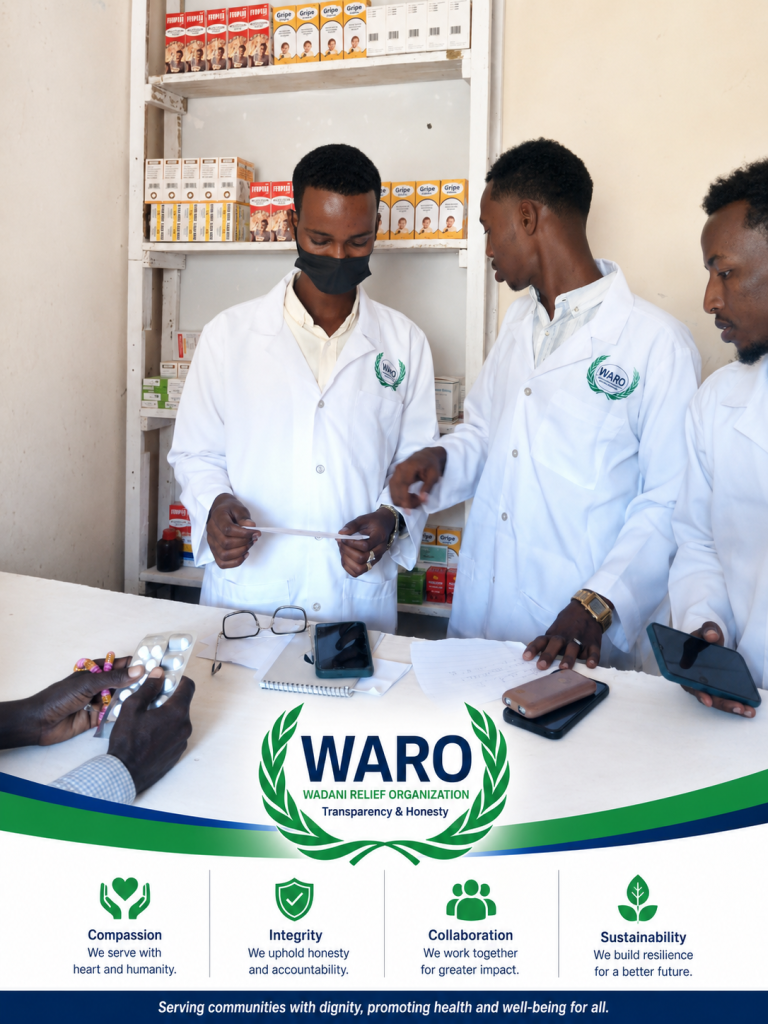
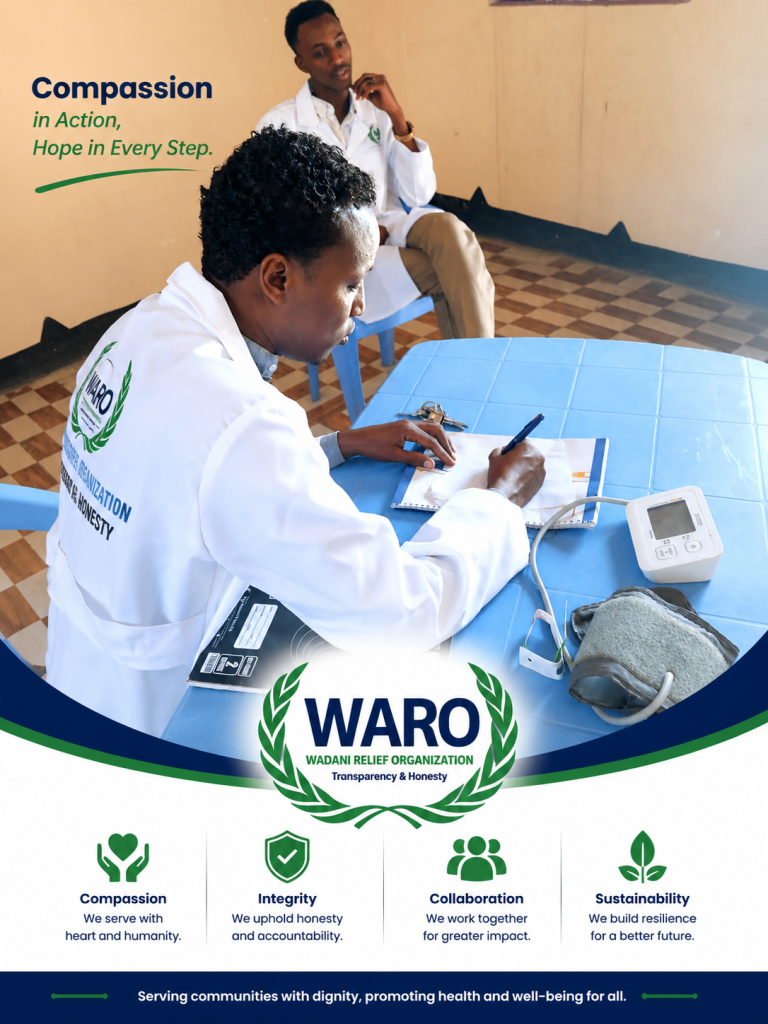
The health situation among internally displaced persons (IDPs) in Baardheere District, Gedo Region, remains concerning due to limited access to essential healthcare services. Many displaced families, particularly women, children, older persons, and people with disabilities, face difficulties accessing timely medical care. Common health concerns include acute respiratory infections, diarrheal diseases, malaria, malnutrition among children under five, maternal health complications, and untreated chronic illnesses. Inadequate health facilities, shortages of essential medicines, and insufficient medical personnel continue to affect service delivery.
The overall humanitarian situation is characterized by prolonged displacement caused by conflict, recurrent drought, and climate-related shocks. Most IDP households live in overcrowded shelters with limited access to clean water, sanitation, and hygiene services, increasing the risk of disease outbreaks. Food insecurity, poor nutrition, and limited livelihood opportunities further exacerbate health vulnerabilities. Despite ongoing efforts by humanitarian partners, significant gaps remain in primary healthcare, maternal and child health services, nutrition support, mental health and psychosocial services, and disease prevention.
Continued humanitarian assistance and strengthened health interventions are essential to improve the well-being and resilience of vulnerable IDP populations in Baardheere.